

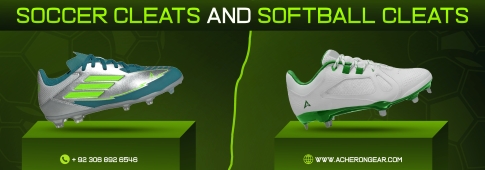
The selection of the right pair of footwear is essential in sports to enhance overall performance during gameplay and ensure maximum comfort for the players. They also help prevent any kind of injury and give you a firm grip on the ground. Of the many sports, only two require specialized footwear, which are soccer and softball. Both of these games require constant running, quick direction changes, and pivoting, making it vital to have comfortable, performance-worthy footwear. The soccer cleats and softball cleats are designed to serve different purposes. So, how do soccer cleats differ from softball cleats, and which one is the right choice for you? Let’s delve into the blog to know the answer.
What Are Soccer Cleats?
Soccer cleats, or football cleats, are specialized footwear designed for playing soccer that help players achieve proper traction and stability on various surfaces. These soccer cleats come in different materials, sizes, and designs to give your team a unique representation and an excellent performance range. These cleats are typically lightweight and flexible, allowing better ball control and quick movements. The following are the general features of football cleats that make them popular among players.
- Often comes in a lightweight design to offer agility and comfort during long matches.
- Consists of a mix of short and long studs to offer optimal traction for sprinting and quick direction changes.
- Available in different sole configurations to play on firm ground (natural grass), soft muddy ground, and artificial turf ground.
- Comes in a sock-like fit design that provides better ankle support while maintaining flexibility.
What Are Softball Cleats?
Softball cleats are a unique pair of footwear that showcase your skills on every surface. They are specifically designed for softball or baseball to deliver unmatched durability, traction, and comfort. They also offer traction, stability, and protection, but there are distinct differences compared to soccer cleats, given the nature of the sport. The following are the key features of the softball cleats that differentiate them from soccer cleats.
- Often comes in higher cuts to provide ankle protection when pivoting or sliding into bases.
- Softball cleats are designed with more ankle support, as this game involves more lateral movements and stops.
- Available in metal cleats for improved traction on dirt and grass, and molded cleats for greater comfort and durability.
- Offers a wider spread of spikes for maximum balance and stability during explosive movements.
Key Differences Between Soccer Cleats and Softball Cleats
Now that you have the basic understanding and knowledge of both soccer cleats and softball cleats, let’s dive into the specific differences between them.
Design and Construction
Soccer Cleats: They are more streamlined and lightweight in design to help you with quick bursts of speed and mobility. These cleats feature a thinner sole and are more flexible.
Softball Cleats: These cleats feature added ankle support to protect the foot during aggressive movements, such as sliding or sudden stops. They are ideal for performing high-impact actions.
Cleat Configuration
Soccer Cleats: They have a varying number of studs, typically 6 to 12 for firm ground/artificial turf, often with 6 longer ones for soft ground, with more focus on speed and directional changes.
Softball Cleats: The number of studs on a softball varies by brand, style, and whether they are molded or metal. Typically, you’ll find standard designs with around 12 studs or a similar setup tailored for the movements specific to softball.
Support and Comfort
Soccer Cleats: As compared to the softball cleats, they focus more on flexibility and quick foot movement rather than ankle protection.
Softball Cleats: They are designed for comfort during long innings or sliding into bases due to their higher ankle support and more cushioning. Some softball cleats come with extra padding around the heel area to help prevent injuries.
Materials Used
Soccer Cleats: These are constructed from lightweight synthetic materials for quick footwork. Leather cleats are also available, offering durability and comfort but at a higher weight.
Softball Cleats: They often come in both leather and synthetic versions, with a focus on durability, ankle support, and comfort.
Can You Wear Soccer Cleats for Softball or Vice Versa?
For each sport, there are different footwear specifically designed for it to deliver a hundred percent performance. However, the answer to your question is not simple; it’s not a yes-or-no. While soccer cleats and softball cleats may appear similar, their designs, cleat placement, and support levels are tailored to different types of movement.
Can You Wear Soccer Cleats for Softball?
Soccer cleats do not provide the maximum ankle movement and support that is required for softball’s sliding and sudden lateral movements. They are not ideal to wear during a softball game; however, you could wear soccer cleats for softball in an emergency or if you’re just getting started. Furthermore, the soccer cleats have a different number of studs that do not deliver the kind of grip needed for softball’s base running and explosive starts. So, you can wear the soccer cleats for softball only in emergencies or sudden situations.
Can You Wear Softball Cleats for Soccer?
It is advisable not to use softball cleats for soccer. The stud pattern on softball cleats is designed for dirt or grass and does not support the rapid direction changes required in soccer. Furthermore, they tend to be heavier, which can restrict your movement and speed on the soccer field.
Which Cleat Is Better for Your Sport?
The following are a few factors on the basis of which you can choose the right footwear for your sport, whether football or softball.
- The soccer cleats are perfect for firmer surfaces or turf, whereas the softball cleats are best suited for softer dirt or grass fields.
- For quick-footed soccer players, it’s crucial to have lightweight cleats that provide superb traction. In contrast, for softball, especially when playing infield or running the bases, it is essential to choose cleats that provide lateral stability and ankle support.
- Some leagues may require a specific type of cleat, such as metal, molded, or other types, depending on the playing conditions.
Thus, players can select cleats for their sport based on their individual needs, playing conditions, and the level of support they require.
Conclusion
Selecting the right cleats for your game is essential to ensure both performance and safety. Although soccer cleats and softball cleats serve similar functions, their construction and design cater to the specific playing styles and requirements of each sport. The soccer cleats are best suited for players who need lightweight footwear with excellent grip and flexibility on firmer surfaces. On the other hand, softball cleats are perfect for athletes seeking enhanced ankle support and lateral stability, which are essential for quick sprints, sliding, and pivoting on both dirt and grass. Whether you’re playing soccer or softball, always choose cleats that offer the right amount of support, comfort, and traction for your specific sport. If you’re in the market for custom sportswear, be sure to check Acheron Gear and our wide range of products to suit your needs.